Ingredients
Method
- Now that we’ve got everything ready, let’s walk through the steps for an unforgettable butter cheesecloth turkey.
Step 1: Preparing the Turkey
- Start by preheating your oven to 325°F (163°C). Remove the turkey from the fridge and let it come to room temperature, which will help it cook more evenly. Make sure to remove the giblets and the neck from the cavity. Rinse the turkey under cold water and pat dry with paper towels.
Step 2: Making the Herb Butter
- In a mixing bowl, combine the softened butter with the dried rosemary, thyme, smoked paprika, sea salt, black pepper, and garlic powder. Mix well until all the spices are well integrated. This herb-infused butter will form the flavor base for your turkey.
Step 3: Seasoning the Turkey
- Rub the herb butter generously all over the turkey. Don’t forget to get some under the skin on the breast and thighs for extra flavor. This is where that rich taste will really shine through.
Step 4: Stuffing the Turkey
- In the turkey cavity, place the quartered lemon and orange, along with a few sprigs of thyme and rosemary. Add the rough-chopped carrots, celery, and onion. Not only do these aromatics add flavor, but they will also help keep the turkey moist.
Step 5: Preparing the Cheesecloth
- Soak your cheesecloth in the melted butter. Make sure it's completely saturated. This cheesecloth will be your secret weapon! Once soaked, drape it over the turkey, tucking it in around the bird. This will act as a shield, locking in moisture and flavor.
Step 6: Roasting the Turkey
- Place the turkey in a roasting pan and pour the chicken broth into the bottom of the pan. This creates a steaming effect while roasting. Roast the turkey based on its weight; a general guideline is about 13 minutes per pound. Baste the turkey every 30 to 45 minutes with the pan juices.
Step 7: Removing the Cheesecloth
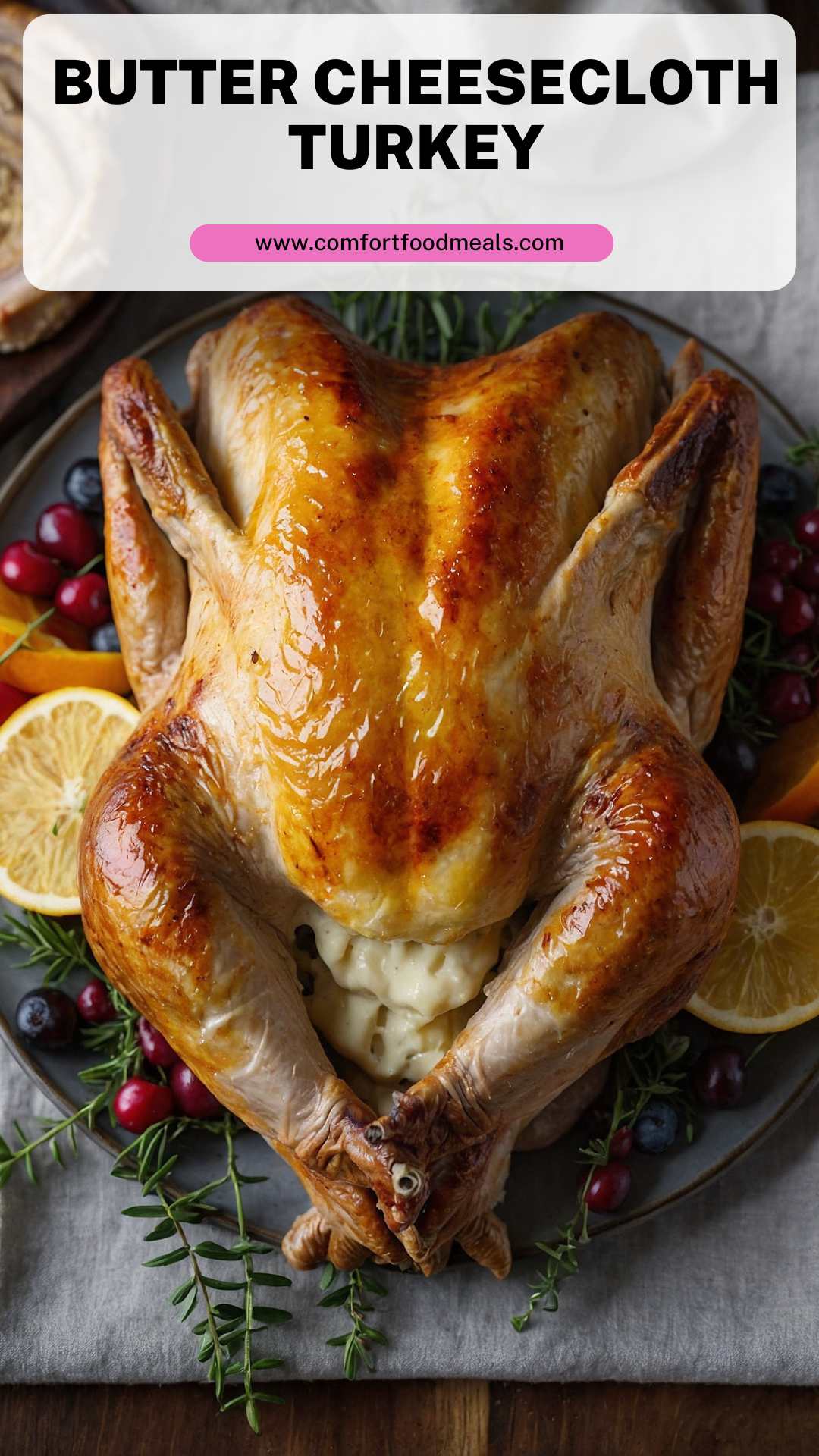
- About 30 minutes before the turkey is done, carefully remove the cheesecloth. You'll want the skin to get crisp and golden. Keep basting it with the pan juices during this time.
Step 8: Resting the Turkey
- Once it’s reached an internal temperature of 165°F (74°C) in the thickest part, remove it from the oven. Let it rest for at least 20-30 minutes. This is crucial. It allows the juices to redistribute, ensuring that every slice you take is juicy and flavorful.
Notes
- Don’t rush the defrost: Ensure that your turkey is fully thawed before cooking. A partially frozen bird will lead to uneven cooking.
- Use quality cheesecloth: Opt for organic or high-quality cheesecloth to avoid any chemical residues impacting your dish.
- Check internal temperature: Always use a meat thermometer for accuracy. This will help avoid undercooking or overcooking.
- Baste often: Frequent basting leads to extra flavor. It enhances moisture and creates a stunning appearance.