Ingredients
Method
Step 1: Preheat Your Oven
- Before you begin mixing, preheat your oven to 400°F (200°C). This ensures that your bread will bake evenly and thoroughly.
Step 2: Prepare Your Ingredients
- In a large mixing bowl, combine the yogurt and half of the self-raising flour. Stir with a spoon or spatula until it starts to come together.
Step 3: Mix the Dough
- Gradually add the remaining self-raising flour. The dough will be sticky initially, but don’t panic! Gently knead the dough on a lightly floured surface for about five minutes. Remember, this isn’t about perfection; just want to bring the ingredients together.
Step 4: Shape the Dough
- Once you’ve kneaded the dough, shape it into a round loaf or divide it into smaller pieces, depending on your preference. The goal is to have a consistent thickness for even baking.
Step 5: Place on a Baking Sheet
- Transfer your shaped dough onto a lined baking sheet. Feel free to sprinkle a little extra flour on top for aesthetic appeal.
Step 6: Bake
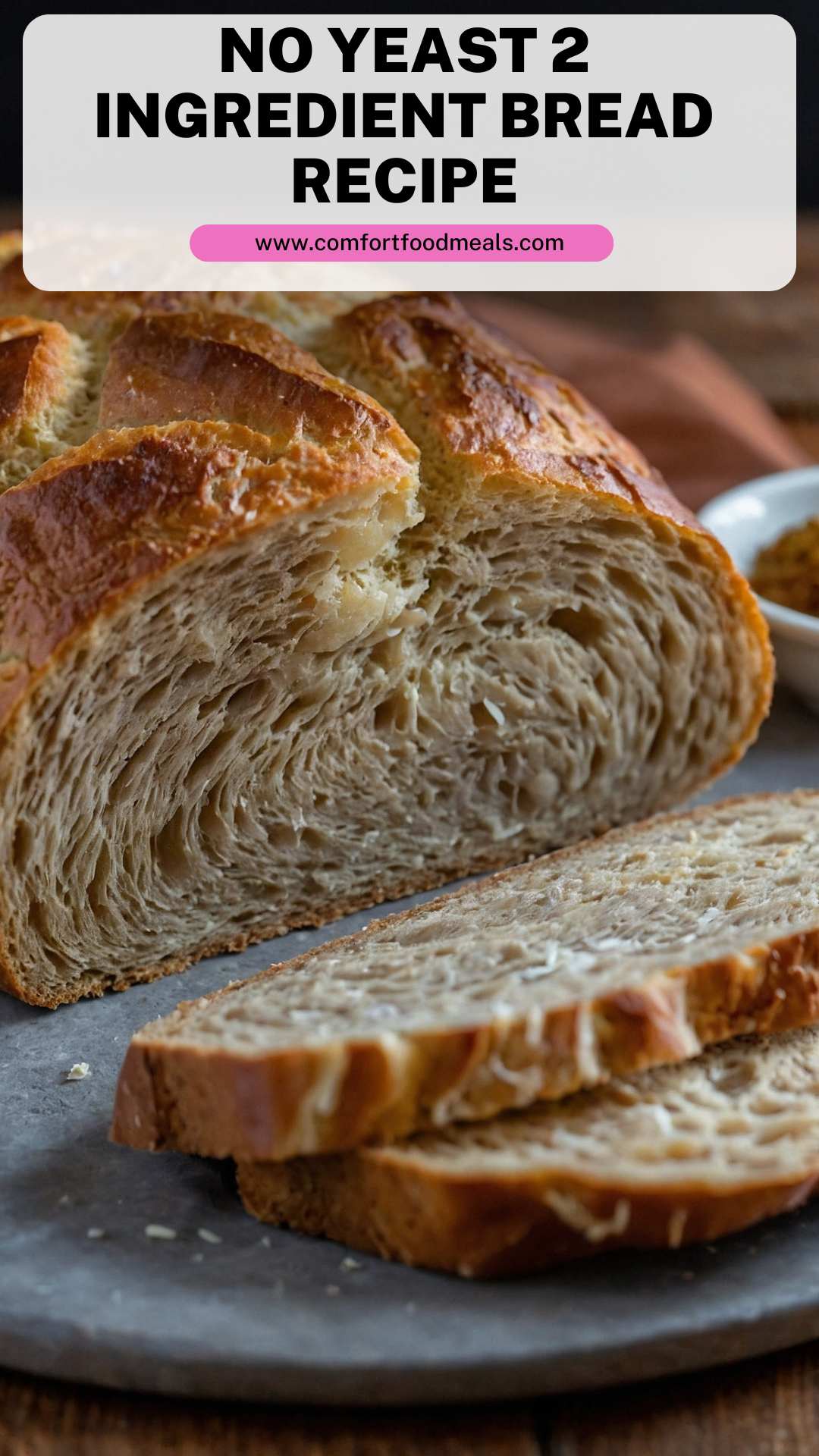
- Pop your bread into the preheated oven. Bake for about 25–30 minutes or until the bread is golden brown and sounds hollow when tapped on the bottom.
Step 7: Cool and Serve
- Once done, let it cool on a wire rack for a few minutes. Slice it while warm, and enjoy with your favorite toppings!
Notes
Here are five tips to ensure your no yeast 2 ingredient bread turns out perfectly:
Flour Matters: Always use self-raising flour for the best results. If you have all-purpose flour, you can mix in baking powder in a 1:2 ratio (1 teaspoon baking powder per cup of flour) to create a substitute.
Don’t Over-knead: While it’s tempting to knead until smooth, a little texture can enhance your bread. Overworking can lead to a tougher end product.
Monitor Baking Time: Oven temperatures vary, so start checking your bread at 25 minutes. You want it golden brown, with a hollow sound when tapped.
Experiment with Additions: From herbs and seeds to cheese or even dried fruits, don’t hesitate to get creative!
Serve Fresh: Best eaten fresh from the oven, but don’t worry if you have extras. It’s still delicious the next day when toasted.
Don’t Over-knead: While it’s tempting to knead until smooth, a little texture can enhance your bread. Overworking can lead to a tougher end product.
Monitor Baking Time: Oven temperatures vary, so start checking your bread at 25 minutes. You want it golden brown, with a hollow sound when tapped.
Experiment with Additions: From herbs and seeds to cheese or even dried fruits, don’t hesitate to get creative!
Serve Fresh: Best eaten fresh from the oven, but don’t worry if you have extras. It’s still delicious the next day when toasted.