Ingredients
Method
Step 1: Searing the Short Ribs
- Start by heating the avocado oil in a large pot over medium-high heat. This oil has a high smoke point, making it perfect for searing. Once it’s shimmering, season the short ribs with salt and pepper.
- Carefully place the short ribs in the pot, searing them on all sides until richly browned. This step is crucial as it locks in flavors that will be foundational for your soup. After about 8-10 minutes of searing, remove the ribs from the pot and set them aside.
Step 2: Building Flavor with Vegetables
- Now, you have beautiful browned short ribs. In the same pot, add the onions, carrots, and celery. Sauté the vegetables for about 5-7 minutes, stirring occasionally. This is where your kitchen will start to smell amazing.
- Add in the minced garlic and smoked paprika, stirring for another minute. The warmth of the paprika and the aroma of garlic creates an enticing base for the soup.
Step 3: Adding the Short Ribs Back
- Once the vegetables are tender, it’s time to bring back those seared short ribs. Place them back into the pot, along with the bay leaf, thyme, and Worcestershire sauce. These ingredients will deepen the flavor profile, creating a complex taste that’s oh-so-satisfying.
Step 4: Pour in the Stock
- Carefully pour in the beef stock or bone broth. The liquid should cover the short ribs but not be overflowing. This stock is vital; it provides the rich, savory essence of the soup. Stir gently, then bring the pot to a boil over high heat. Once it reaches a boil, reduce the heat to low and cover.
Step 5: Simmering for Perfection
- Let the mix simmer for about 2 to 3 hours. The longer, the better! This allows the beef to become tender and the flavors to blend harmoniously. This step tests your patience, but the outcome is well worth the wait. Stir occasionally to ensure nothing sticks to the bottom.
Step 6: Adjusting and Serving
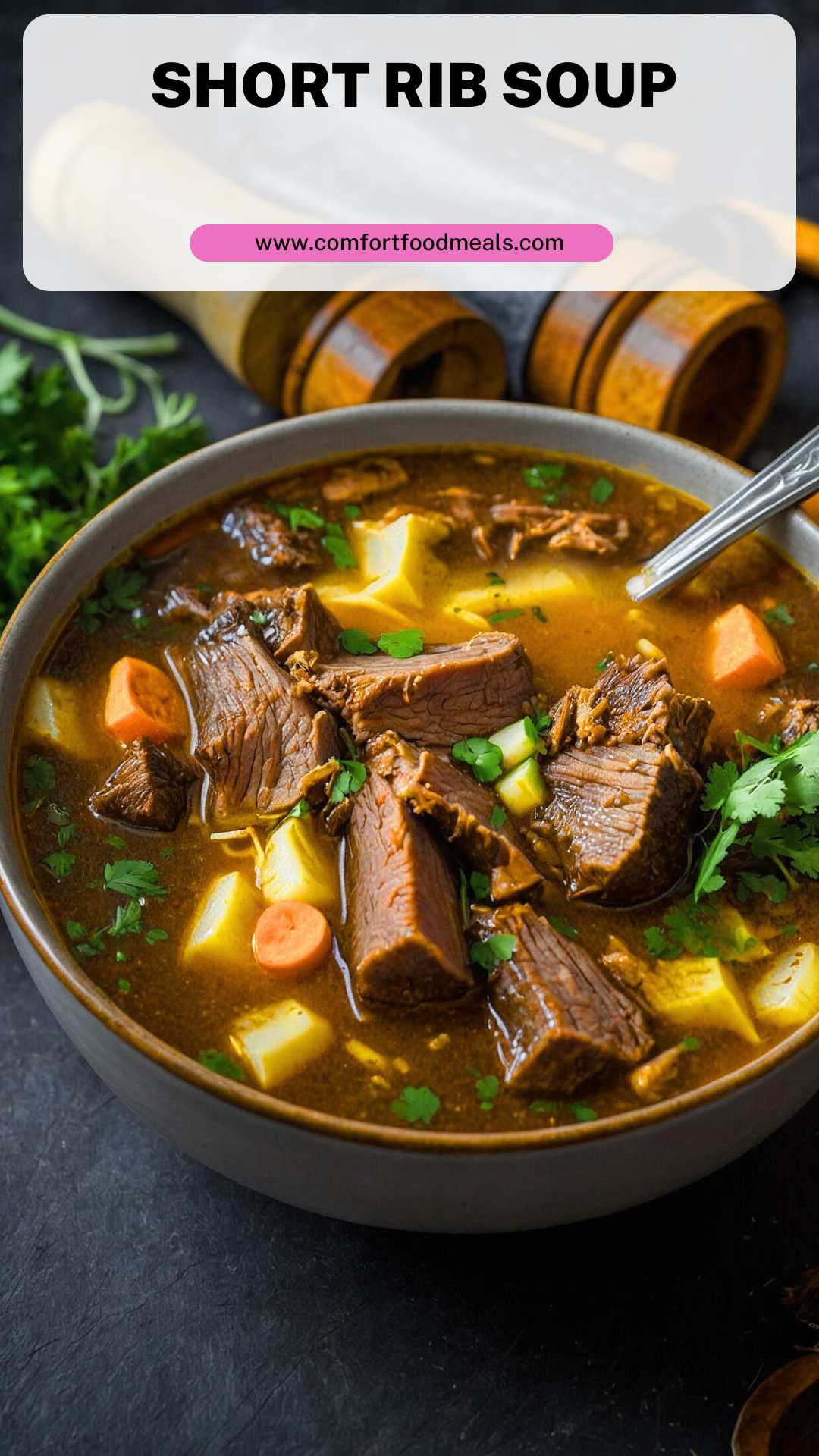
- After your soup has simmered to perfection, remove the short ribs from the pot. Using two forks, shred the meat, discarding any bones and excess fat. Add the shredded meat back into the soup and season with salt and pepper to taste. Serve hot and garnish each bowl with freshly chopped parsley.
Notes
- Short Ribs: These are perfect for soup because they become incredibly tender and flavorful with slow cooking. The bone also adds depth to the broth.
- Beef Stock vs. Bone Broth: While beef stock will give a rich flavor, bone broth offers additional nutrients due to its collagen content. Choose based on your nutritional preference.
- Vegetables: Feel free to add or substitute with any vegetables you have on hand. Potatoes or parsnips can add unique flavors.