

Ingredients
Method
Step 1: Sear the Ground Beef for Flavor Development
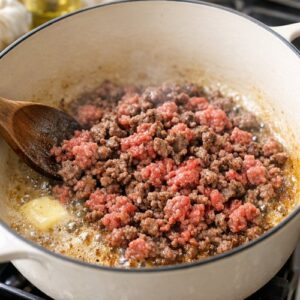
- Place your soup pot over medium-high heat and add one tablespoon of butter. Once the foam subsides (about 30 seconds), add your ground beef and Montreal seasoning. Here's the critical part: don't stir it constantly. Let the meat sit undisturbed for 2-3 minutes so the surface makes contact with the hot pan. This creates the Maillard reaction—browning that develops hundreds of complex flavor compounds. Use a wooden spoon to break the meat into small, even crumbles. You're looking for no pink remaining, which takes about 6-8 minutes total. The rendered fat from the beef is liquid gold for flavor, so don't drain it. Remove the cooked beef to a clean bowl and set aside.
Step 2: Build Your Aromatic Base
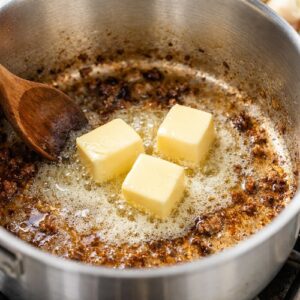
- Lower your heat to medium and add the remaining three tablespoons of butter to the same pot (keeping all that browned beef residue on the bottom). Add your chopped onion and stir occasionally. This is where patience matters. You're not rushing to brown the onions—you're slowly softening them, which takes about 10 minutes. As the onions cook, their natural sugars convert into caramelized compounds that add subtle sweetness and savory depth. You want them soft and translucent, not crispy. Once they're there, add your minced garlic and cook for exactly 2 minutes. Any longer and garlic turns bitter; any shorter and its sulfur compounds don't develop properly.
Step 3: Create the Roux Base
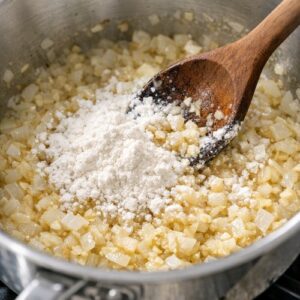
- Sprinkle the all-purpose flour over the softened onions and garlic. Stir constantly for 3-5 minutes. This cooking time is essential—you're cooking out the raw flour taste while the flour particles absorb the fat. The flour coats itself in butter, which prevents lumps from forming when liquid hits it later. You're looking for a paste-like consistency that smells nutty and toasted, not raw or grainy. This is the foundation of your soup's texture.
Step 4: Incorporate Liquid and Create the Base
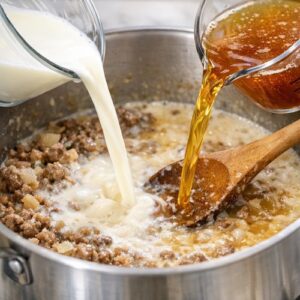
- Slowly pour in the milk and beef stock while stirring constantly. This is where the roux does its job—the fat-coated flour particles absorb the liquid and swell, thickening it naturally. Stir for about 1 minute until you don't see any lumps. The mixture should look creamy and relatively smooth. If you see small flour lumps, use an immersion blender for 10 seconds to break them up. You're not making a thick gravy yet; this is your soup base.
Step 5: Melt the Cheese Into Smoothness
- Add your freshly shredded cheddar cheese in three batches, stirring between each addition. This prevents overwhelming the pot with cold cheese and ensures even melting. Stir until each batch is completely dissolved and the mixture looks smooth and uniform. This takes about 2 minutes total. The milk fat helps the cheese emulsify into the liquid instead of becoming grainy or separating. Don't let the soup come to a boil during this step—high heat can break the emulsion and make the cheese separate.

Step 6: Add Vegetables and Beef to Complete the Soup
- Stir in the diced celery, cubed potatoes, and reserved cooked ground beef. Bring the soup to a gentle boil, then immediately reduce the heat to a simmer. Cover and cook for 10-12 minutes until the potatoes are fork-tender. Don't cook longer than 12 minutes or the potatoes break down too much and create a starchy, grainy texture. You want them soft but still holding their shape. The potatoes release starch into the liquid, making the soup even creamier without adding any additional thickeners.

Step 7: Taste and Season Before Serving
- Turn off the heat and taste a spoonful. Because you used low-sodium beef stock, you likely need to adjust salt and pepper. Add salt gradually—a quarter teaspoon at a time—tasting between additions. Remember that the cheese is already salty, so you need less than you'd think. Crack fresh black pepper over the top to brighten the flavors. Ladle into bowls and top with dill pickle chips, which add acid and probiotics that support digestion.

Notes
- Use Freshly Shredded Cheese, Never Pre-Shredded - Pre-shredded cheese contains anti-caking agents (usually cellulose) that prevent it from emulsifying smoothly into the soup. It clumps and tastes grainy. Fresh block cheese melts into silk within seconds.
- Don't Skip the Roux Cooking Step - Raw flour has a chalky, unpleasant taste. Those 3-5 minutes of cooking transform it into something nutty and pleasant while stabilizing the starch so it thickens without lumping. This is non-negotiable.
- Keep Your Potatoes Uniform in Size - Cut them into half-inch cubes so they cook evenly. Larger pieces stay firm inside while the outside falls apart; smaller pieces turn to mush. Uniformity ensures every spoonful has the same perfect texture.
- Temperature Control Is Critical for Cheese - Never let the soup boil vigorously while the cheese is melting in. High heat breaks the emulsion, causing the cheese proteins to separate and become grainy. Medium-low heat keeps everything silky.
- Taste Before Adding Salt - Beef stock, cheese, and seasoning blends already contain salt. Most beginner cooks over-salt soup. Add gradually and taste constantly.