This post contains affiliate links. As an Amazon Associate I earn from qualifying purchases.
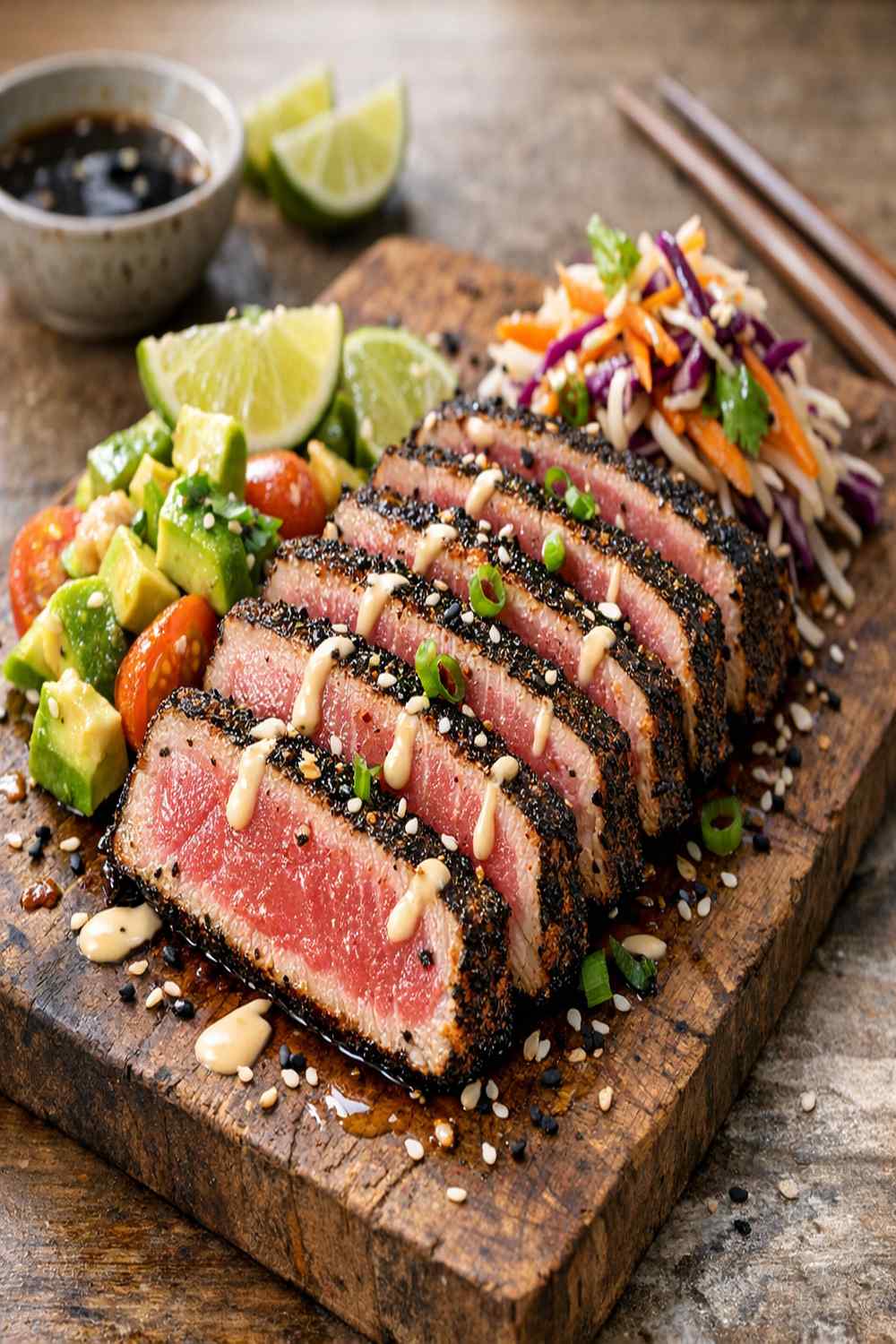
I’m going to be honest with you—when life gets busy, the first thing to fall apart is dinner. You’re standing at 6 p.m. looking at takeout menus instead of nourishing your body with real food. But here’s what I’ve learned working with hundreds of people in my practice: one smart cooking session on Sunday changes everything. Make blackened ahi tuna once, and you’ve got five different dinners ready to go. This recipe is my secret weapon for meal preppers who refuse to eat boring chicken breast all week. It’s elegant enough for company yet humble enough to feel like comfort food. Pair it with our BBQ Spatchcock Chicken Recipe if you want variety in your protein rotation, or keep it simple and master this one first.
Blackened Ahi Tuna Recipe Meal Prep: Cook Once, Eat All Week
I discovered the power of meal prepping not in culinary school but at my grandmother’s kitchen table. She’d spend Friday afternoons preparing components—not full meals, but building blocks. She’d have a roasted fish, fresh vegetables, and grains ready to mix and match all week. It felt effortless when she served dinner, but I now understand the intentionality behind it. Years later, when I was juggling my first year as a registered dietitian with a family of my own, I realized I was making her mistake in reverse. I was waiting until dinner time to figure out what to cook, stressed and hungry. That’s when I brought her system into my own kitchen and adapted it for the foods I love—like this blackened ahi tuna. Now, instead of feeling trapped by weeknight cooking, I feel in control.
Why This Recipe Is Perfect for Meal Prep
- Protein that stays tender through the week — Unlike chicken that can dry out after two days, ahi tuna maintains its moisture and texture when stored properly, keeping your meals enjoyable from Monday through Friday
- Versatile across breakfast, lunch, and dinner — This isn’t just a dinner recipe. Flake it over your morning eggs, layer it into lunch bowls, or serve it as a composed dinner plate
- The spice crust actually improves with time — The flavors meld and deepen as the fish sits in your refrigerator, meaning day three tastes better than day one
Your Weekly Meal Plan With This Recipe
Here’s exactly how I use one batch of blackened ahi tuna across different meals throughout my week. This isn’t about eating the same thing five times—it’s about transforming one ingredient into completely different experiences.
- Monday: Ahi Tuna Power Bowl — Serve your warm blackened tuna over jasmine rice with sautéed bok choy, pickled ginger, and a drizzle of sesame oil. This is how you eat it fresh, celebrating the crispy spice crust
- Wednesday: Blackened Tuna Salad Wrap — Flake your chilled tuna and mix it with a touch of avocado mayo, fresh cucumber, and arugula. Wrap it in a whole grain tortilla for lunch that actually satisfies
- Friday: Tuna Cakes with Remoulade — Flake the remaining tuna, bind it with a beaten egg and panko breadcrumbs, and pan-sear into crispy patties. It’s a completely different dish from the same protein
The Ingredients—Scaled for a Full Week
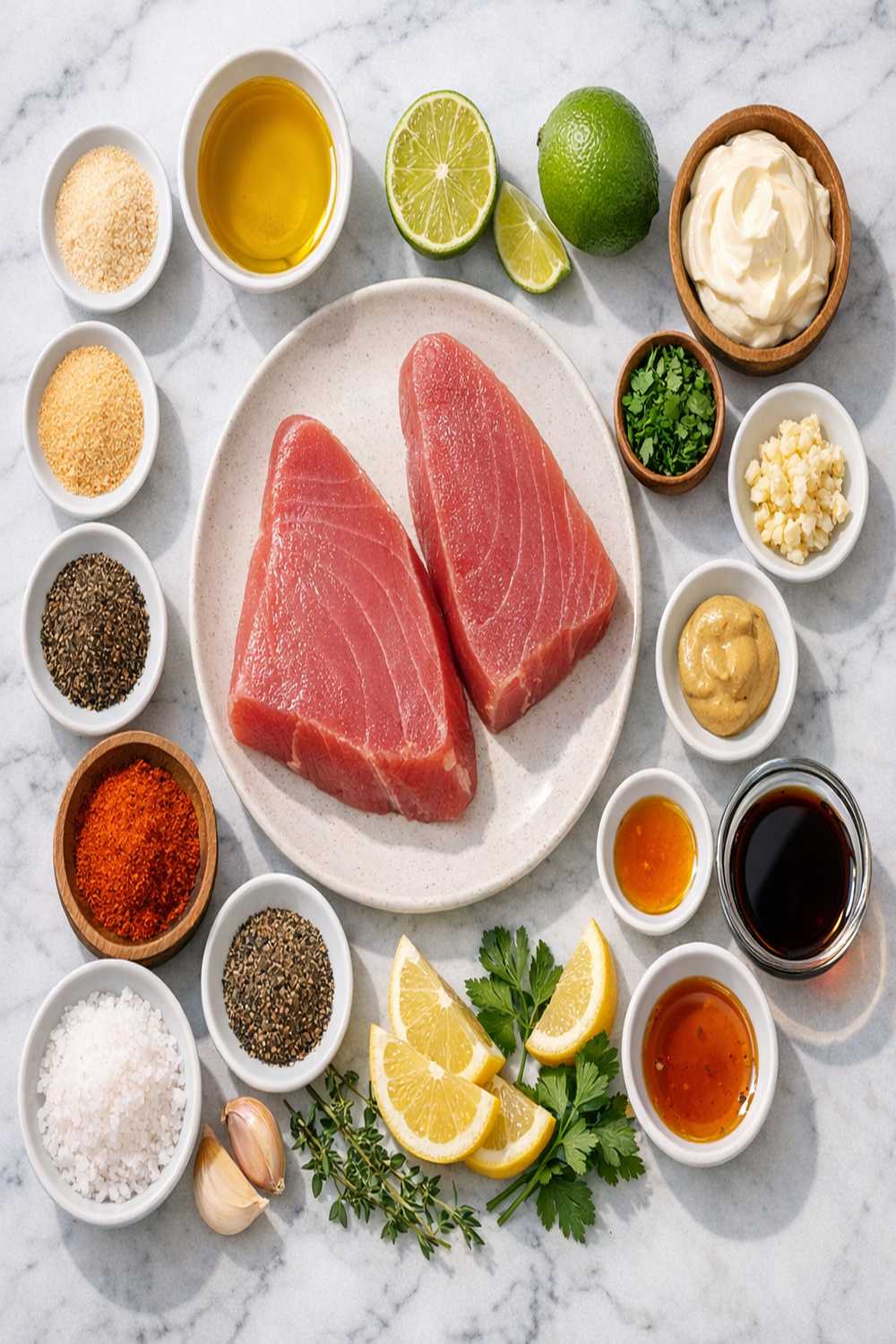
I’m giving you enough here to comfortably serve four people across multiple meals, or to give yourself several generous portions to mix and match throughout the week. These quantities are intentional—not too much that you’ll waste, not so little that you’re cooking again by Wednesday.
- ½ teaspoon freshly ground black pepper (grind just before cooking, it makes a real difference)
- 2 teaspoons smoked paprika (the smoke adds depth that regular paprika can’t touch)
- 1 teaspoon sea salt (divided—some for the rub, some for the fish itself)
- Fresh lime juice (for finishing, never underestimate this step)
- 4 lbs fresh ahi tuna steaks (look for deep red color with no brown spots, ideally sushi-grade if you plan to serve any rare)
- 1 teaspoon cayenne pepper (adjust down if you’re heat-sensitive, up if you want real fire)
- ½ teaspoon ground ginger (fresh warmth that prevents the spices from tasting flat)
- ⅛ teaspoon ground clove (less is more here—this ingredient is powerful)
- ¼ teaspoon fennel seeds (crushed lightly in your hand to release oils)
- ½ teaspoon dried oregano (brings an herbaceous note to cut through the richness)
- 2 tablespoons high-heat cooking oil like avocado oil (butter alone will burn at the high temperature we need)
- ½ cup unsalted butter (melted, gives the spice crust something to grip)
The Meal Prep Process: How to Make Blackened Ahi Tuna Recipe in Bulk
This isn’t just cooking—it’s a system. You’re going to work efficiently, use your equipment smartly, and end up with perfectly cooked fish every single time. I prep four steaks at once, working in two batches. This takes about fifteen minutes total, and your kitchen will smell like a high-end restaurant.
Step 1: Choose Your Fish Wisely and Prepare It Correctly
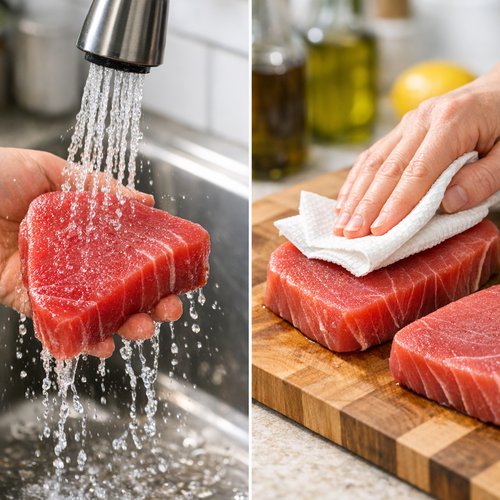
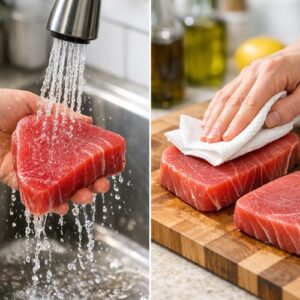
Start by running your tuna steaks under cool running water and patting them completely dry with paper towels. I cannot stress this enough—wet fish will steam instead of sear. Take your time here. Pat them dry, then pat again. The drier your fish, the better the crust. Slice each large steak in half lengthwise to create thinner pieces that cook evenly. You’re aiming for about ½-inch thickness. Thicker pieces won’t develop that beautiful crust without overcooking the interior.
Step 2: Build Your Spice Mixture with Intention
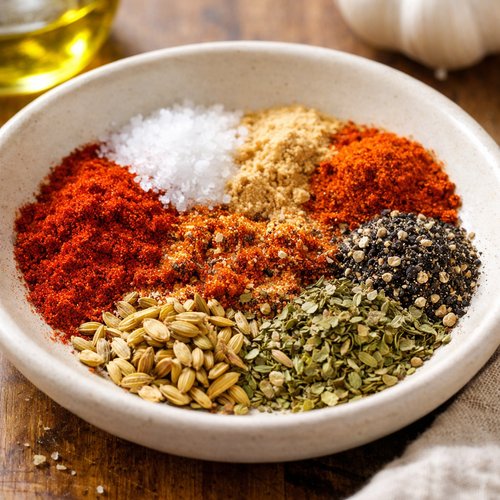
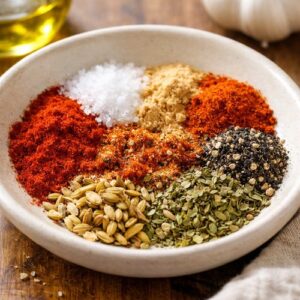
In a small shallow bowl, combine your paprika, cayenne, ginger, sea salt, black pepper, oregano, fennel seeds (crushed between your fingers), and ground clove. Mix this thoroughly so the spices are evenly distributed. I use a small whisk and spend about thirty seconds on this step. Uneven spice distribution is the difference between a balanced dish and one that’s too salty or too hot in certain spots. Set this mixture within arm’s reach of your cooking station.
Step 3: Heat Your Cast Iron Skillet Until It’s Nearly Smoking
Place a cast iron skillet or heavy-bottomed stainless steel pan over high heat. This takes about three minutes. You know it’s ready when you hold your hand about six inches above the surface and feel serious heat radiating back. The skillet should be so hot that when you add oil, it shimmers immediately. Open your kitchen windows or turn on your exhaust fan now—blackening requires high heat and will create some smoke. This is not a sign something’s wrong; it’s exactly what you want.
Step 4: Coat Your Fish in Butter, Then Spice
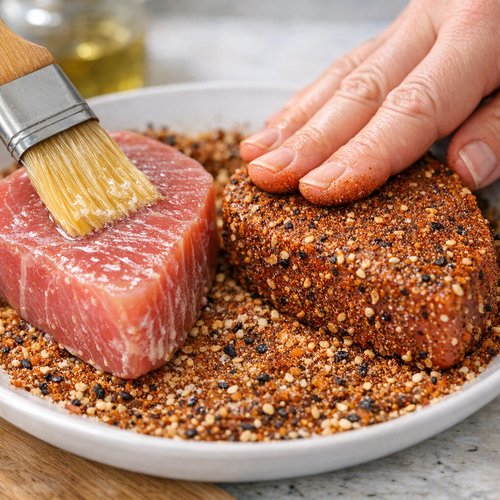
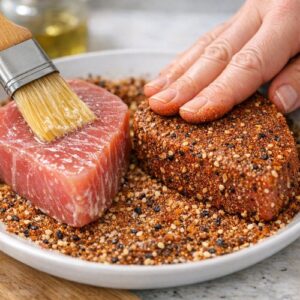
Working with two pieces at a time, brush both sides of your tuna steaks lightly with melted butter. Now press them firmly into your spice mixture, coating both sides generously. Press down so the spices adhere and don’t just sit on top. This creates the actual crust, not just a coating. If your spices are falling off, your fish wasn’t dry enough. Make a mental note for next time.
Step 5: Sear with Speed and Confidence
Carefully place your spiced tuna into the screaming-hot skillet. Do not move it. Let it sit for exactly ten seconds. Flip it. Let it sit for another ten seconds on the second side. You now have blackened ahi tuna with a pink, rare center. If you want it cooked through, go thirty seconds per side maximum. Any longer and you’ll lose the tender texture that makes this special. Remove it to a clean plate immediately. The residual heat continues cooking the fish even after it leaves the pan.
Step 6: Repeat and Cool Before Storage
Repeat this process with your remaining two pieces. Once all your tuna is cooked, let it cool to room temperature on a clean cutting board. This takes about ten minutes. Do not rush this step by putting hot fish directly into storage containers—the steam will make it watery and sad. While it cools, wipe out any spice bits from your skillet if you’re cooking the full four pieces, or simply let it cool between batches.
Storage and Organization System
- Glass meal prep containers with airtight seals — Glass doesn’t retain odors or stains like plastic, and you can see what you’ve got at a glance. Portion your tuna into individual servings so you’re not opening a large container five times a week
- Divide into two-piece portions — Two pieces of tuna per container is my sweet spot. It’s enough for a satisfying meal, small enough that you’re not dealing with a massive container
- Label with date and “best by” date — Write the date you cooked it and the date you should eat it by (five days maximum). This removes decision-making and keeps you safe
How to Reheat Without Losing Quality
This is where most people mess up. They nuke their beautiful tuna and wonder why it’s rubbery. The key is gentle, quick reheating that respects the delicate protein.
Days 1-2 (Monday and Tuesday): Eat your tuna cold or at room temperature. Seriously. It’s delicious this way, especially in bowls or salads. If you want it warm, place it in a skillet over medium heat for ninety seconds per side. Don’t use the microwave—it’s the enemy of texture.
Days 3-4 (Wednesday and Thursday): These pieces are perfect for flaking into salads, wraps, or tuna cakes where you’re breaking them apart anyway. If you want to warm them, use the same skillet method for just sixty seconds per side. The fish is drying slightly by now, so less time in heat is better.
Day 5 (Friday): This is your tuna cake day. You’re binding the flaked fish with egg and breadcrumbs, which protects it and creates a new texture. Cook your patties in a skillet over medium-high heat until the outside is golden and crispy, about three minutes per side.
Can I Freeze Blackened Ahi Tuna Recipe?
Yes, but I’m going to be honest about the tradeoffs. Freezing changes the texture of fish more noticeably than it does with other proteins. That said, if you freeze your tuna on the day you cook it and thaw it properly, it’s still perfectly good.
Wrap each piece of cooled blackened tuna individually in plastic wrap, then place all wrapped pieces in a freezer bag with the air pressed out. Label it with the date. Your tuna will keep frozen for up to two months, though I prefer using it within three to four weeks. Thaw it in your refrigerator overnight—never on the counter. This prevents bacterial growth and keeps the fish as moist as possible.
Thawed tuna is great for breaking into salads or making tuna cakes, but it won’t have quite the same texture if you want to serve it as a simple piece. I still do it, but I’m intentional about how I use it.
Expert’s Nutritional Tip: Why This Fish Matters More Than You Think
As a registered dietitian, I see people choosing chicken breast because they think it’s the healthiest protein. But ahi tuna is actually a nutritional powerhouse they’re overlooking. It’s rich in omega-3 fatty acids, which reduce inflammation and support heart and brain health. It also contains selenium, a mineral most people don’t get enough of, which supports thyroid function and acts as a powerful antioxidant. The spices in this recipe add more than just flavor—turmeric-adjacent compounds in ginger and the capsaicinoids in cayenne have been studied for anti-inflammatory benefits. When you’re meal prepping, choose fish like this that actually nourishes you at a cellular level.
Nutrition Information
Per two-piece serving (approximately 6 oz of blackened ahi tuna with spices): 220 calories | 28g protein | 11g fat | 1g carbohydrates | 0g fiber | 480mg sodium. Based on USDA FoodData Central.
When you eat this meal four to five times across the week, you’re getting 112 to 140 grams of high-quality protein plus omega-3 fatty acids that most people are deficient in. Your muscles repair and rebuild. Your brain gets the building blocks it needs. Your inflammation markers improve. This is why meal prepping this specific recipe matters—you’re not just saving time, you’re making a health investment.
What to Pair With Blackened Ahi Tuna Recipe Throughout the Week
The same blackened tuna tastes completely different depending on what you serve it with. This is your secret to never getting bored. I rotate my sides to keep things interesting, and I prep a couple of these components on the same Sunday I cook the tuna.
- Monday: Jasmine rice, steamed bok choy, sesame oil — This is your classic preparation, celebrating the fish with simple, clean flavors
- Tuesday: Mixed green salad with avocado, grapefruit, and lime vinaigrette — The citrus cuts through the richness beautifully
- Wednesday: Your wrap or taco situation — Check out our Batter Recipe For Fish Tacos for inspiration on how to build a complementary meal, or keep it simple with a tortilla and quick slaw
- Thursday: Buddha bowl with quinoa, roasted sweet potato, and tahini dressing — This is hearty and grounding
- Friday: Transformed into tuna cakes — Serve alongside coleslaw and a squeeze of fresh lemon
Common Mistakes to Avoid
Mistake 1: Cooking at too low a temperature. Your skillet absolutely must be smoking hot. If you’re not confident it’s hot enough, it’s not. Low heat creates steamed fish, not blackened fish. The spice crust won’t develop properly, and your whole meal suffers.
Mistake 2: Not patting the fish completely dry. This is the single biggest culprit in rubbery tuna. Moisture is the enemy of the crust. I mean it. Pat, pat again, then pat once more.
Mistake 3: Moving the fish while it’s searing. The urge to flip it early or move it around is strong. Resist it. You’re developing a crust that needs an uninterrupted heat source. Leave it alone.
Mistake 4: Overcooking. Ten seconds per side gives you rare to medium-rare. Thirty seconds per side is your absolute maximum if you want moist fish. Forty-five seconds and you’ve crossed into dry territory. Ahi tuna is not like chicken—it doesn’t need to reach a specific internal temperature to be safe. Choose your doneness and stick to it, but respect that it cooks fast.
Seasonal Variations: Adapting This Recipe Year-Round
Spring and Summer: Add a pinch of fresh lemon zest to your spice mixture. Serve your tuna over chilled grains with fresh herbs and a bright vinaigrette. The seasoning stays exactly the same, but everything around it becomes lighter and more refreshing.
Fall: Include a tiny pinch of ground cinnamon in your spice blend—it sounds weird, but it deepens the warm spices and creates a subtle complexity. Pair it with roasted root vegetables and wild rice for grounding comfort.
Winter: Double your ginger and add a whisper of ground turmeric. Serve over creamy cauliflower rice or polenta. The same blackened tuna becomes warm and nourishing in a completely different way.
Make-Ahead Guide: Prep Before You Cook
I’ve found that prep work before the actual cooking makes the whole process smoother. On Saturday afternoon, I mix my entire spice blend and store it in a small glass jar. I thaw my fish in the refrigerator if it was frozen. I get my containers ready. I clear space in my refrigerator. On Sunday morning, my actual cooking takes less than twenty minutes because everything is ready.
You can also pre-portion your rice and vegetables if you want. I don’t go quite that far, but I understand why some people do. The goal is making Monday morning as effortless as possible.

Blackened Ahi Tuna Recipe
Ingredients
Method
- Start by running your tuna steaks under cool running water and patting them completely dry with paper towels. I cannot stress this enough—wet fish will steam instead of sear. Take your time here. Pat them dry, then pat again. The drier your fish, the better the crust. Slice each large steak in half lengthwise to create thinner pieces that cook evenly. You're aiming for about ½-inch thickness. Thicker pieces won't develop that beautiful crust without overcooking the interior.
- In a small shallow bowl, combine your paprika, cayenne, ginger, sea salt, black pepper, oregano, fennel seeds (crushed between your fingers), and ground clove. Mix this thoroughly so the spices are evenly distributed. I use a small whisk and spend about thirty seconds on this step. Uneven spice distribution is the difference between a balanced dish and one that's too salty or too hot in certain spots. Set this mixture within arm's reach of your cooking station.
- Place a cast iron skillet or heavy-bottomed stainless steel pan over high heat. This takes about three minutes. You know it's ready when you hold your hand about six inches above the surface and feel serious heat radiating back. The skillet should be so hot that when you add oil, it shimmers immediately. Open your kitchen windows or turn on your exhaust fan now—blackening requires high heat and will create some smoke. This is not a sign something's wrong; it's exactly what you want.
- Working with two pieces at a time, brush both sides of your tuna steaks lightly with melted butter. Now press them firmly into your spice mixture, coating both sides generously. Press down so the spices adhere and don't just sit on top. This creates the actual crust, not just a coating. If your spices are falling off, your fish wasn't dry enough. Make a mental note for next time.
- Carefully place your spiced tuna into the screaming-hot skillet. Do not move it. Let it sit for exactly ten seconds. Flip it. Let it sit for another ten seconds on the second side. You now have blackened ahi tuna with a pink, rare center. If you want it cooked through, go thirty seconds per side maximum. Any longer and you'll lose the tender texture that makes this special. Remove it to a clean plate immediately. The residual heat continues cooking the fish even after it leaves the pan.
- Repeat this process with your remaining two pieces. Once all your tuna is cooked, let it cool to room temperature on a clean cutting board. This takes about ten minutes. Do not rush this step by putting hot fish directly into storage containers—the steam will make it watery and sad. While it cools, wipe out any spice bits from your skillet if you're cooking the full four pieces, or simply let it cool between batches.
FAQs
Can I meal prep if I only want to cook twice a week instead of once?
Absolutely. Cook half your tuna on Sunday and half on Wednesday. This gives you fresher fish throughout the week at the expense of two cooking sessions instead of one. It’s a valid trade-off if freshness matters more to you than time savings.
What if I’m afraid of cooking fish and this seems intimidating?
You’re not afraid of the fish—you’re afraid of wasting expensive fish. I get it. Start with just two pieces instead of four. Practice the technique once with a smaller commitment. Once you’ve done it successfully once, you’ll feel completely confident the second time. Fish is actually more forgiving than people think. You’ve got a thirty-second window of error.
Is sushi-grade tuna necessary, or can I use regular grocery store ahi?
For cooking, regular ahi is fine. Sushi-grade matters only if you’re planning to eat any portion of it raw or nearly raw. If you’re cooking it through, any high-quality ahi will work beautifully.
Can I double the spice recipe and make a big batch to use throughout the month?
You can, but I don’t recommend it. Spices lose potency over time, especially ground spices. Make your mixture fresh each time you cook. It takes two minutes and tastes noticeably better.
What’s the best way to defrost frozen ahi tuna for this recipe?
Always thaw in your refrigerator overnight. This is non-negotiable for food safety with fish. The cold thaw prevents bacterial multiplication. Set it on a plate so any water drains away from the fish. Pat it very dry before cooking—thawed fish can be wetter than fresh fish.
Can I use this same spice blend on other proteins?
Absolutely. This spice blend is exceptional on shrimp, swordfish, salmon, or even blackened chicken. It’s versatile while still maintaining its identity. If you make it once, you’ll find yourself reaching for it constantly.
More Recipes You’ll Love
- Ahi Tuna Grilled Recipe — A warmer-weather variation if you prefer your tuna kissed by flames instead of cast iron
- this simple cake — Use this same binding technique when you want to transform your leftover blackened tuna into cakes
- Batter Recipe For Fish Tacos — If you want an alternative way to serve your fish in taco form
You’re going to walk into this week differently now. No more standing at the refrigerator at 6 p.m. wondering what to eat. No more takeout because cooking feels impossible. You’ve got beautiful, nourishing blackened ahi tuna waiting for you. You’ve got five different meals built from one smart cooking session. You’ve got control back. That’s what meal prepping is really about—taking back your time and your health, one Sunday at a time.
Your family will eat better because you meal prepped. Your budget will thank you. Your future self will be grateful every single night this week. That’s the power of cooking something worth eating multiple times.
Cook what makes you happy!